

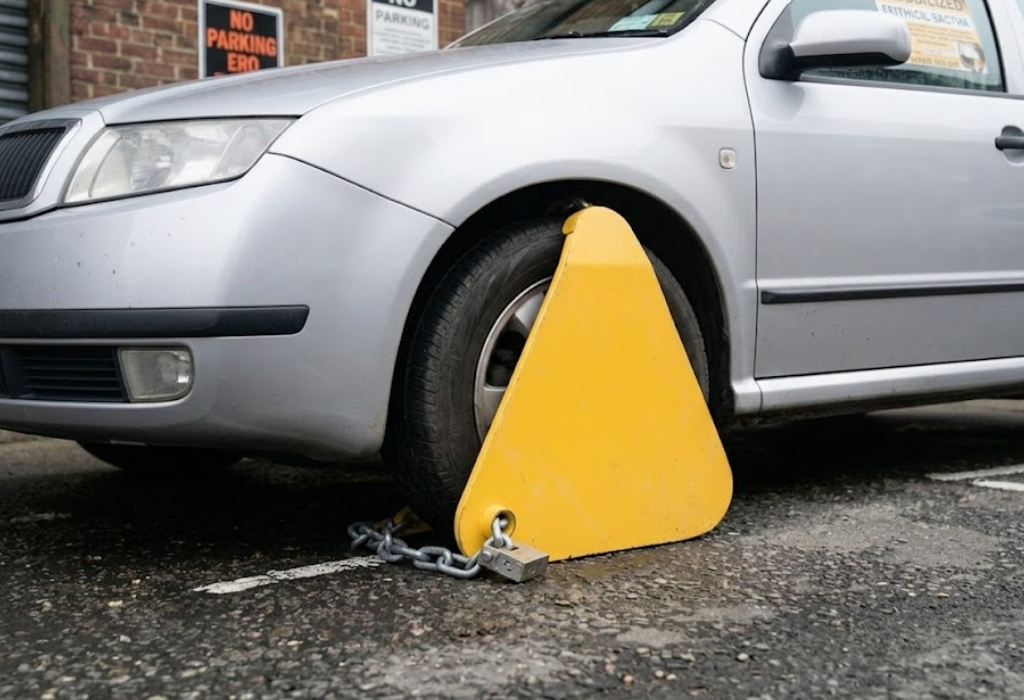
Unfortunately, clamping is big business and in 2022, a whopping €1.7m in profit was made by a private clamping company in Dublin in 2022. Similarly, Dublin City Council generated €4.24 million in 2014 from parking fines. Altogether, local authorities across the country collected more than €88 million from parking fines last year. It's fair to say that, despite the expense and inconvenience caused by getting clamped most of us can see that regulated, government backed clamping is actually a good thing and plays an important role in improving traffic mobility throughout the cities of Ireland. The issues arise largely with private companies. One particular issue is where these private companies target those that are left with no option but to park outside a designated parking space. We see this happen all the time in universities, hospitals and apartment blocks. There are simply not enough parking spots provided and people are left with little option but to park illegally in the clamper's eyes. This is like shooting fish in a barrel and is a massive money making exercise in our opinion.
Unauthorised interference with mechanism of vehicle.113.—(1) A person shall not, without lawful authority or reasonable cause, interfere or attempt to interfere with the mechanism of a mechanically propelled vehicle while it is stationary in a public place, or get on or into or attempt to get on or into the vehicle while it is so stationary.(2) A person who contravenes subsection (1) of this section shall be guilty of an offence.(3) Where a member of the Garda Síochána has reasonable grounds for believing that a person is committing an offence under this section, he may arrest the person without warrant.(4) This section shall not apply to a person taking, in relation to a mechanically propelled vehicle which is obstructing his lawful ingress or egress to or from any place, such steps as are reasonably necessary to move the vehicle by human propulsion for a distance sufficient to terminate the obstruction.(5) Where a person is charged with an offence under this section, it shall be a good defence to the charge for him to show that, when he did the act alleged to constitute the offence, he believed, and had reasonable grounds for believing, that he had lawful authority for doing that act.
Regarding removing a clamp on private property people take several approaches. However, you must be careful not to damage the clamp itself. Motorists have had success with jacking the car up and removing the relevant parts that are immobilised before slipping off the chain. This involves taking the wheel off, removing the bolt holding the wishbone to hub and from there the ball joint pops out. This allows you to slide the chain off and then repeat in reverse to get back rolling. The most common approach that people take is to snip a link in the chain and remove the chain in that fashion, before replacing the link with a brand new one. Ensure that you return the clamp to the relevant company or contact them letting them know where to collect it. We advise against the Homer Simpson approach though… We feel that clamping is most likely a necessary evil but it needs regulation similar to those county council backed companies that operate on public ground. There should be a cooling off period of at least 15 minutes before a warning sticker is applied, it is unfair to punish someone for being minutes late back to their car after having paid for parking in the first place. Let us know what you think on the whole issue!






Leave a Reply