

Reviewed by the MicksGarage technical team
Quick answer: An EGR (Exhaust Gas Recirculation) valve sends a small amount of exhaust gas, typically 5–15%, back into the engine’s intake. This lowers combustion temperatures and cuts harmful nitrogen oxide (NOx) emissions. EGR valves often clog with carbon, especially on diesels used for short trips. That causes an engine warning light, rough idling, loss of power and higher fuel use. A clogged valve can often be cleaned, but a failed one needs replacing.
| At a glance | |
|---|---|
| What it does | Recirculates exhaust gas to cut NOx emissions |
| Fitted to | Almost all modern diesels and many petrol cars |
| Most common problem | Carbon build-up, which makes the valve stick open or closed |
| Common fault codes | P0400–P0409 |
| Fix | Clean it if clogged, replace it if failed |
| Part price | Roughly €90–€300 for many cars, more for some |
What does an EGR valve do?
When fuel burns at very high temperatures, nitrogen and oxygen combine to form nitrogen oxides (NOx), a harmful pollutant. The EGR valve opens to let a measured amount of exhaust gas back into the intake. Exhaust gas is low in oxygen, so it slows combustion slightly and lowers peak temperatures, which cuts NOx production.
The engine control unit (ECU) opens the valve under light loads and cruising, and closes it at idle and under full acceleration, when the engine needs maximum power. Without a working EGR system, most modern cars can’t meet emissions standards.
Types of EGR valve
Electric (electronic) EGR valves are found on most modern cars. The ECU controls a small motor or solenoid directly and uses a position sensor to check exactly how far the valve is open.
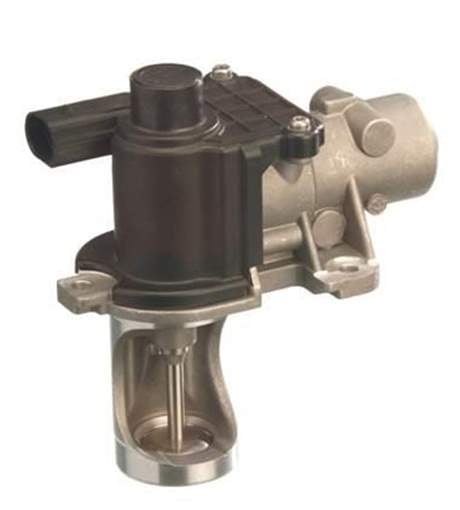
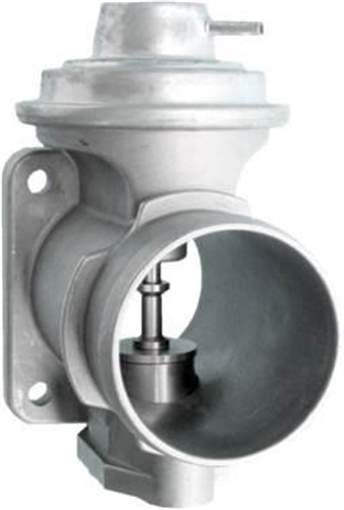
Pneumatic (vacuum-operated) EGR valves are found on older cars. They are opened by engine vacuum, controlled by a solenoid. Split or leaking vacuum hoses are a common cause of faults.
Many diesels also have an EGR cooler, which cools the exhaust gas before it re-enters the engine. Coolers can clog or leak too.
What are the symptoms of a bad EGR valve?
| Symptom | Likely cause |
|---|---|
| Engine management light on | The ECU has detected incorrect EGR flow or a sensor fault |
| Rough or unstable idle, or stalling | Valve stuck open, letting exhaust gas in at idle |
| Loss of power, or limp mode | Valve stuck, or the ECU has restricted power to protect the engine |
| Higher fuel consumption | Incorrect air and fuel mixture |
| Black smoke (diesels) | Too much exhaust gas recirculating, causing incomplete combustion |
| Knocking or pinking (petrol) | Valve stuck closed, so combustion runs too hot |
| DPF clogging more often | Extra soot from a faulty EGR system |
| Failed NCT emissions test | Higher emissions |
Common EGR fault codes
If the engine light is on, a fault code reader will tell you whether the EGR system is the cause. Common generic codes are:
- P0400: EGR flow malfunction
- P0401: EGR flow insufficient, which usually means a clogged valve or passages
- P0402: EGR flow excessive, which usually means the valve is stuck open
- P0403: EGR control circuit malfunction
- P0404: EGR circuit range or performance problem
- P0405 / P0406: EGR position sensor circuit low or high
Many manufacturers use their own codes too, such as P1403 to P1406, so check what the code means for your make. For more on warning lights, see our dashboard warning lights guide.
What causes an EGR valve to fail?
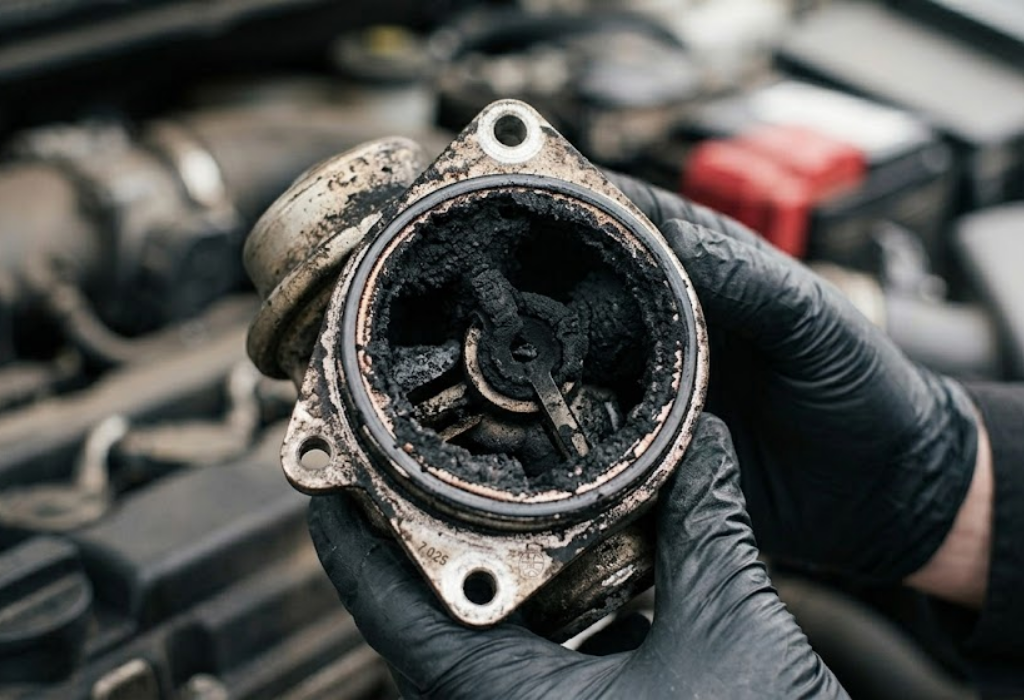
- Carbon build-up: by far the most common cause. Soot and oil vapour bake onto the valve and passages, especially on diesels that do a lot of short, low-speed trips.
- Electrical faults: a failed motor, solenoid or position sensor.
- Vacuum leaks: split hoses on pneumatic valves.
- Engine problems further up: burning oil or a faulty injector produces extra soot that clogs the valve faster.
Can you clean an EGR valve?
Often, yes. If the valve is clogged but still works electrically, cleaning can restore it. There are two approaches:
- Remove and clean. Take the valve off, spray it with an EGR cleaner such as Holts EGR & Carb Cleaner, and carefully scrape off hard carbon deposits. Fit a new gasket when you refit it. This is the most effective method.
- Clean in place. Intake cleaners such as Wynns Diesel EGR & MAF Cleaner, JLM Diesel Air Intake, MAF & EGR Cleaner or Liqui Moly Pro-Line Intake System Cleaner are sprayed into the intake with the engine running, following the product instructions. They work best for prevention and light deposits.
A regular run at motorway speeds, and a quality diesel cleaner in the tank such as Redex Diesel System Cleaner, help to slow carbon build-up. If the valve has failed electrically or is badly worn, cleaning won’t fix it, and it needs replacing.
How much does EGR valve replacement cost in Ireland?
The part price depends on the car and engine. As an example, EGR valves for an Audi A6 2.0 TDI (2005–2011) range from about €90 to €300 at MicksGarage, depending on the brand. Labour varies a lot: on some engines the valve is easy to reach, while on others it takes several hours. Ask your garage for a fitted quote, or enter your car on our EGR valves page to see the exact parts for yours.
Prices correct at time of writing.
Can I drive with a faulty EGR valve?
Usually for a short time, but don’t ignore it. A faulty EGR valve can put the car into limp mode, increase fuel consumption, clog your DPF faster and cause an NCT emissions failure. If the valve is stuck open, the car may idle roughly or stall. Get the fault codes read and the problem fixed as soon as you can.
EGR valve FAQs
Do petrol cars have EGR valves?
Many do. EGR valves are most associated with diesels, but many petrol engines use them too, or use the valve timing to recirculate exhaust gas internally.
Is an EGR valve the same as a DPF?
No. The EGR valve feeds some exhaust gas back into the engine to cut NOx. The DPF (diesel particulate filter) sits in the exhaust and traps soot. They are linked, though: a faulty EGR valve can make the DPF clog more quickly.
Can I remove or blank off my EGR valve?
No. Removing or blanking an EGR valve on a road car tampers with its emissions controls. It can cause an NCT failure and may affect your insurance. Fix or replace the valve instead.
How long does an EGR valve last?
There’s no fixed interval. Many last well over 150,000 km, but cars that do mostly short trips can clog much sooner. Regular longer drives help keep the valve clean.
Will cleaning the EGR valve clear the engine light?
If the clog caused the fault, cleaning can fix it, but you’ll usually need to clear the code with a fault code reader afterwards. If the light comes back, the valve or its sensor may need replacing.
Need a new EGR valve? Enter your car on our EGR valves page to find the right part, or shop cleaners and degreasers for EGR cleaning products.
Related car parts guides
- How to check brake pads and discs for wear
- Brake fluid change: how often, cost and how to do it
- CV joint replacement cost and signs of wear
- Clutch replacement: signs, cost and lifespan
- Timing belt vs timing chain
- What is a catalytic converter?
- Coolant vs antifreeze: mix ratio chart
- Engine oil explained: what oil does my car need?
- Dashboard warning lights and what they mean



Leave a Reply