With fuel prices and now fuel availability a main point of concern for drivers, maximizing your fuel efficiency has become extremely important. Most drivers are burning through more fuel than they need because of a few simple things. The good news? You don’t need a hybrid or an EV to force a difference in fuel savings right now.
From conserving fuel during a traffic jam, to tweaking some driving habits, and getting the best out of your fuel reserves, we’re going to give you all the key things you need to do to save money on rising fuel prices.
When Does A Car Consume the Most Fuel?
A car consumes the most fuel during rapid acceleration,high speed driving (defined as over 90km/h), extended idling, driving uphill and in heavy stop start traffic. It makes sense then that a slight change in your driving behaviour during some of these tasks will have a positive impact in fuel efficiency.
Things You Can Do To Conserve Fuel While Driving
Reduce Speed
When driving fast, your fuel efficiency drops. Aerodynamic drag also significantly increases when you speed up. For most vehicles, once you cross 100km/h, or 62mph, your fuel economy falls fast. Reducing your speed, even very slightly, can save you a noticeable amount of fuel over a long commute.
Drive Smoothly
If you’re constantly slamming the brakes and hitting the accelerator, you’re actively wasting precious fuel.
-
Avoid jumpy take offs: Accelerate very gently, especially during starts
-
Coast to a stop: If you see a stop coming up, start the slow down gradually by coming off the accelerator well in advance of having to brake.
-
Use Cruise Control: On flat roads, especially motorways, using cruise control helps you to maintain a steady speed which is much more efficient than constant manual adjustments.
How To Conserve Fuel During A Traffic Jam
Traffic jams are one of the biggest fuel efficiency killers. To waste less fuel during a traffic jam, you need to manage momentum as best as possible:
-
Don’t tailgate - leave large gaps so your car can roll consistently at a slow crawl, which is far easier on fuel. Speeding up to a stop and constant braking is what you need to avoid.
-
Gentle take off - accelerate very easily when taking off and generate some space for crawling.
-
Engine off - if you’re in a gridlock situation where you’re not moving for more than 1 minute, turn the engine off. This saves significant fuel in very heavy traffic. Enable the Auto Stop/Start if your car has this feature.
-
Look ahead - look 4 or 5 cars ahead for brake lights, and react earlier. Come off the accelerator immediately and coast to a slow stop. This method uses very little, or no fuel to crawl to a stop like this.
Lighten The Load
Your vehicle is a transport machine, not a storage unit. Reducing the load your car or van needs to carry will only have a positive impact on fuel consumption. If your car boot is full, or your van is packed full of heavy tools you rarely use, remove them, and you’ll increase your fuel efficiency especially during labor intensive tasks like driving uphill.
Myth Busting: Do Roof Racks Increase Fuel Consumption?
No - the impact roof racks could have on fuel consumption is so minimal that it can’t even be properly proven to be negative, (or positive, for that matter). Roof bars weigh between 8 - 12kgs and are aerodynamically designed to allow air to pass smoothly around the roof rack system. What you place on top of the roof rack is what could potentially cause additional drag, resulting in a loss in fuel efficiency - typically heavy, bulky items that aren’t aerodynamically designed.
Maintain Your Vehicle - It’s Not Just For Safety
If your car is neglected, it makes it harder to move. A well maintained vehicle ensures every drop of fuel is used efficiently. The two most important things to maintain are:
-
Tyre Pressure - Under inflated tyres increase rolling resistance, burning more fuel than needed when you drive. Rolling resistance means that when a tyre is under inflated, more of its surface area has to touch the road, causing more friction which acts as a drag on your car. Inflate tyres when they’re cool - before the vehicle is being used - using a portable tyre inflator.
-
Air Filters - A clogged air filter can restrict airflow and slow down engine performance. This can result in sluggish acceleration and a loss of power, forcing you to push harder on the accelerator, killing your fuel efficiency. Air filters should be replaced at every service interval, but are inexpensive and very straightforward to change yourself, at home, more frequently.
Turn Off The A/C
Using your air conditioning drains fuel because the engine has to work harder to run the compressor. To save the most money, turn the air con off altogether. Wind Deflectors can be used to sit on your car windows, allowing you to drive at speed with the window open a little, without creating additional drag. Driving with wind deflectors is the most cost efficient way to circulate fresh air throughout your vehicle.
Fuel Cleaners
Fuel cleaners are designed to be used while driving, forcing your fuel to burn more efficiently.
-
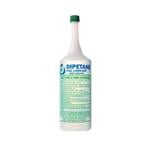
Dipetane is a fuel lubricant that increases fuel economy by creating a more efficient and complete fuel burn. It cleans your engine, lowering dirty emissions and helps you to get more out of the fuel you’ve paid for. Add 300ml to your fuel tank with every fill for maximum efficiency.
-
JLM Diesel Extreme Clean contains a cetane booster, which makes diesel engines run more evenly and smoother, ensuring better fuel consumption. Apart from this, it dissolves blockages, remedies irregular running, rectifies exhaust gas emissions and stabilizes fuel in the tank.
Stocking Up On Fuel
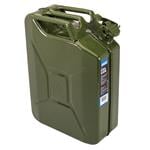
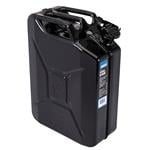
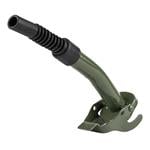
It might be hard, but don't panic - only buy the fuel you intend to consume, and don’t panic buy more than you actually need. When you are storing fuel, use a military grade metal jerry can that is non flammable and never store this in your vehicle. Be aware that fuel has a "best before" date. After about 30 - 60 days, things starts to change in stored fuel:
-
Petrol evaporates and oxidizes, and the good chemicals vanish, leaving behind a sticky varnish that can clog your engine. If it contains ethanol, it also sucks up water from the car, causing the fuel to separate and fail.
- Diesel doesn’t evaporate as fast, but it grows a slimy fungus like algae that lives in the water at the bottom of the tank, which can choke your filters.
Solution If you’re storing fuel for longer periods, you need to seriously consider using Sta-Bil, which stops oxidation, neutralizes water which prevents bacterial growth, and preserves freshness - you can expect your fuel to be chemically sound for up to 24 months after a treatment of Sta-Bil.

_f79a7b.jpg "Tyre Inflators, AMIO 12V Car Air Compressor 20 bar, AMIO")
_163a06.png "Engine Oils, Lubrico Titanium GT 8 5W30 C2/C3 Engine Oil 5 Litre , Lubrico")